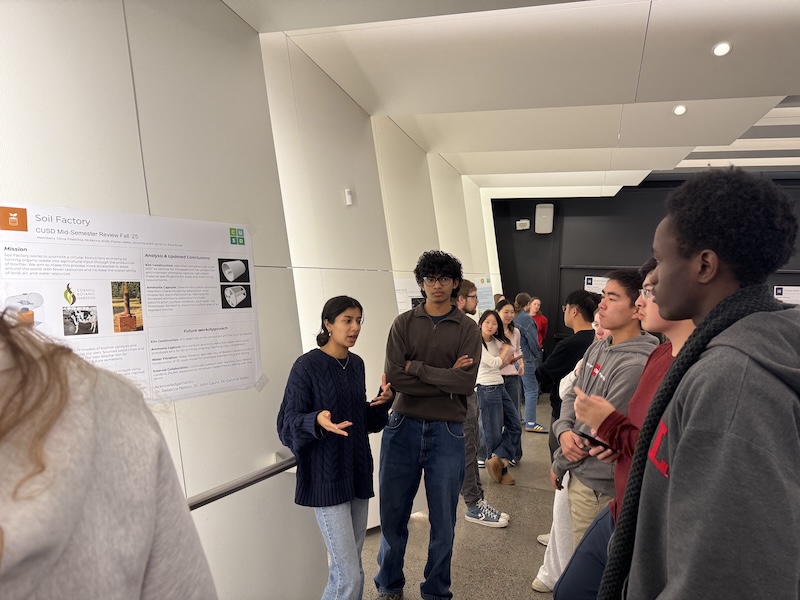
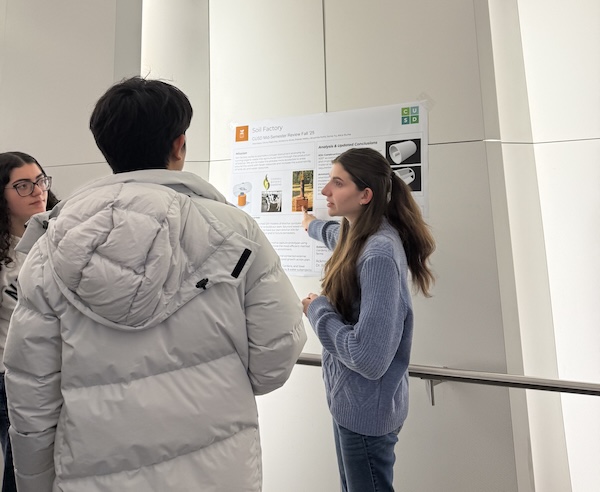
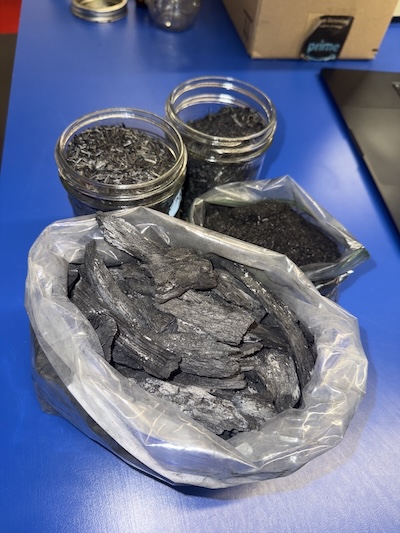
The challenge of feeding growing global populations becomes more difficult due to a decline in agricultural resources such as arable land. The Soil Factory team seeks to address this issue by promoting a circular bionutrient economy which uses biochar to repurpose nutrients from waste into fertilizer, a sustainable method to improve soil for growing crops. This semester, the team explored new methods and models for creating biochar, including designing and building a prototype system for efficiently enriching biochar with nutrients.
Project Overview
Stakeholders
The Soil Factory; Dr. Rebecca Nelson
Disciplines / Majors
Sustainable Design, Environmental Engineering, Chemical
Engineering
Team Overview
The Soil Factory team works to promote a circular nutrient
economy through biochar-focused solutions. We work to recycle
and reuse discarded nutrients from everyday living to breathe
life into plants through high quality soil.
Problem Statement
Current systems treat waste products as end-of-cycle throwaways
while soil and plant health simultaneously suffer from a lack of
nutrient enrichment.
Approach
The team is working towards a circular nutrient economy by
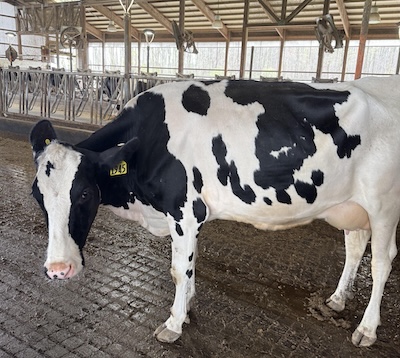
identifying nutrients discarded as agricultural and human waste
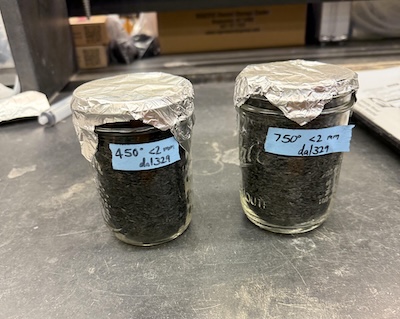
and optimizing systems to repurpose them as fertilizers. Biochar
is a substance with high surface area that excels at capturing
nutrients, retaining water, and providing a home for soil
microbes that support plant health. The team is exploring the
use of biochar in systems that adsorb nitrogen and phosphorus
from dairy barns and human waste products as a nutrient-dense
soil amendment.
Key Accomplishments This Semester
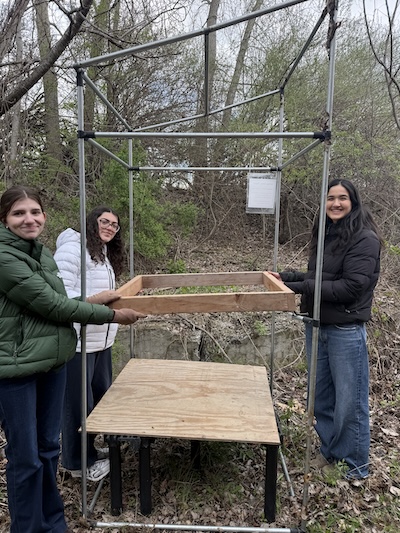
Explored modeling software such as CAD and ANSYS (for fluid
modeling) to simulate the effects of biochar in liquid and
better understand the design process. Worked closely with Dr.
Nelson to design a vertical drying rack system for the Nelson
Lab's acid/base biochar drying system, and constructed a
scaled-down prototype to test the design. Explored unique and
cost-effective methods to detect humidity, and researched
hardware setup (solar panels, fans, pH sensing, acid/base
release, humidity sensor) for the drying system.
Our Work
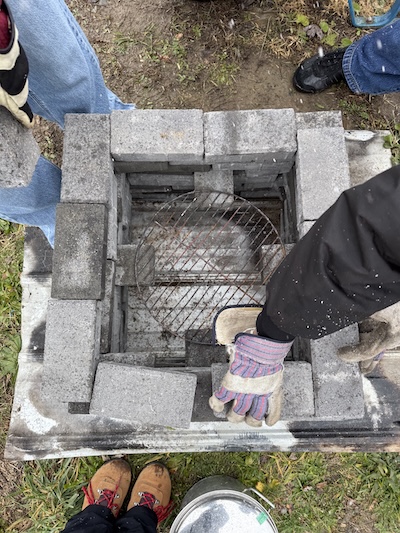
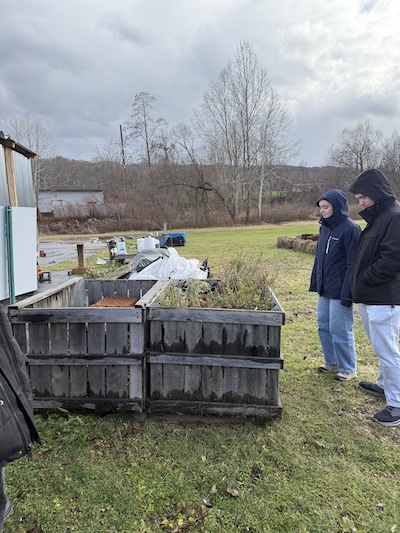
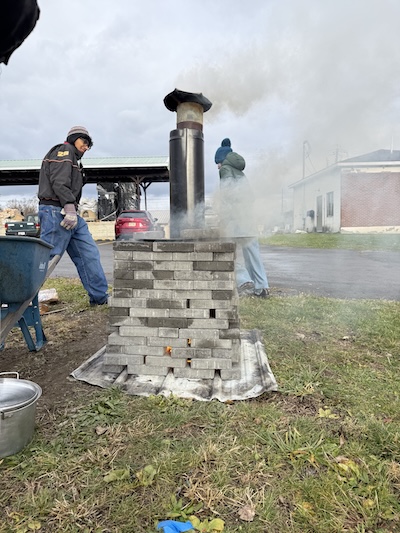
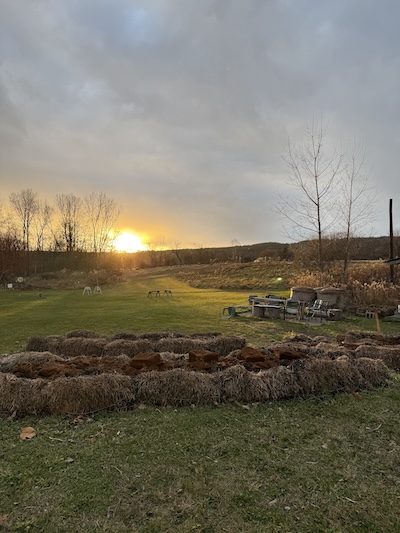
Meet the Team
 Olivia PiserichaTeam Lead
 Charlotte ReitmanMember
 Cynthia ZhengMember
 Judi LeeMember
 McKenna AlvesMember
 Pranav MettuMember
 Sonia YuMember