Solar panels gradually lose efficiency as particulates accumulate on their surface, reducing energy output by as much as 50% in certain climates. The Solar Panel Reboot team researches practical ways to extend panel performance and expand solar accessibility through applied materials research and hands-on engineering. This semester, the team conducted controlled experiments comparing surface coatings that resist buildup, refined an indoor solar simulator for more reliable testing conditions, and constructed a solar-powered outdoor restroom designed to demonstrate solar technology in a community-facing setting.
Project Overview
Stakeholders
Professor Nelson (solar outreach and solar potty
collaboration); Professor Tobias Hanrath and Corning Inc.
(coating analysis); Cogen (solar oven patent); Energy and the
Environment Research Lab (EERL) under Professor K. Max
Zhang
Disciplines / Majors
Mechanical, chemical, electrical, and environmental
engineering
Team Overview
Solar Panel Reboot (SPR) is a CUSD team founded in 2018 that
originally focused on refurbishing solar panels with protective
coatings for off-grid use. The team has since expanded into
three simultaneous active projects, each addressing a different
dimension of solar energy research and outreach. SPR is led by
Supriya Anand and Garrett Smith and includes members from
Mechanical, Chemical, Electrical, and Environmental
Engineering.
Problem Statement
Soiling from dust and particulates can reduce solar panel
output by up to 50% in dry regions, and there is limited
understanding of which coatings best mitigate this effect.
Additionally, there is a need for reliable indoor testing
infrastructure and opportunities to expand public awareness of
solar energy in community settings.
Approach
Three concurrent projects address these challenges. First, the
team is building a solar-powered outdoor portable toilet (solar
potty) in collaboration with Professor Nelson, designed to serve
as a urine collection system for fertilizer research while
raising public sustainability awareness. Second, in partnership
with Corning Inc., the team is analyzing hydrophobic vs.
hydrophilic coatings on glass slides, measuring sliding angles
and contact angles to simulate soiling conditions from the
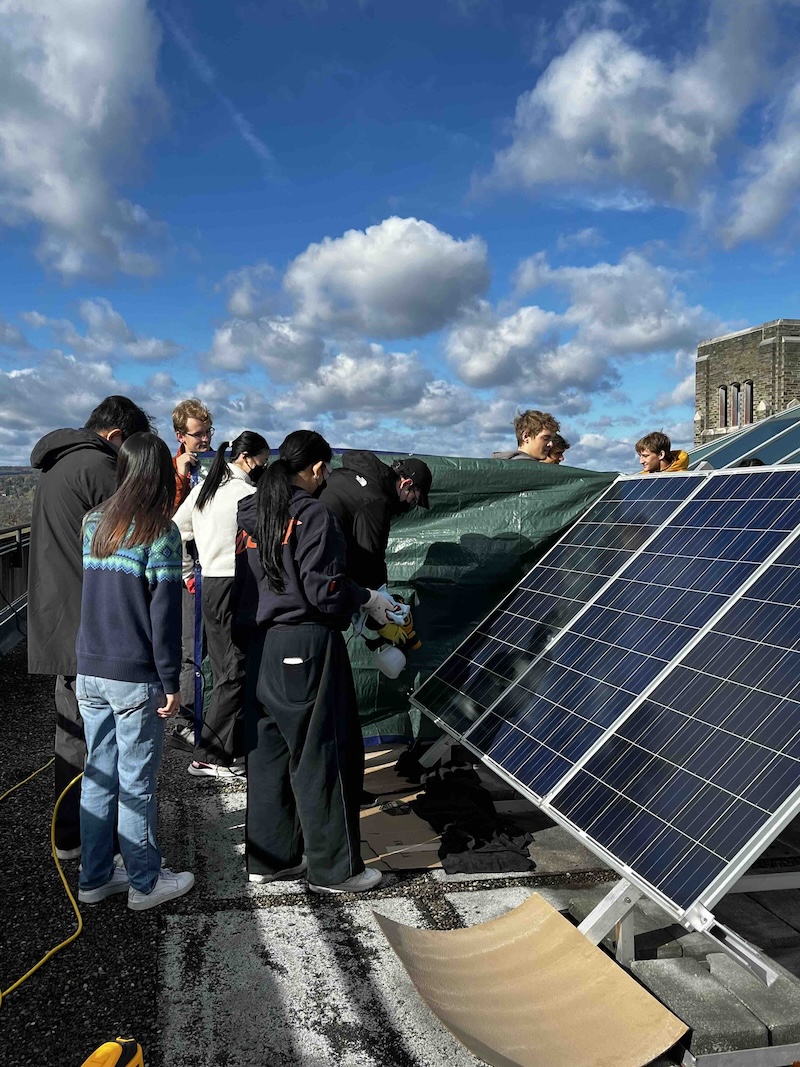
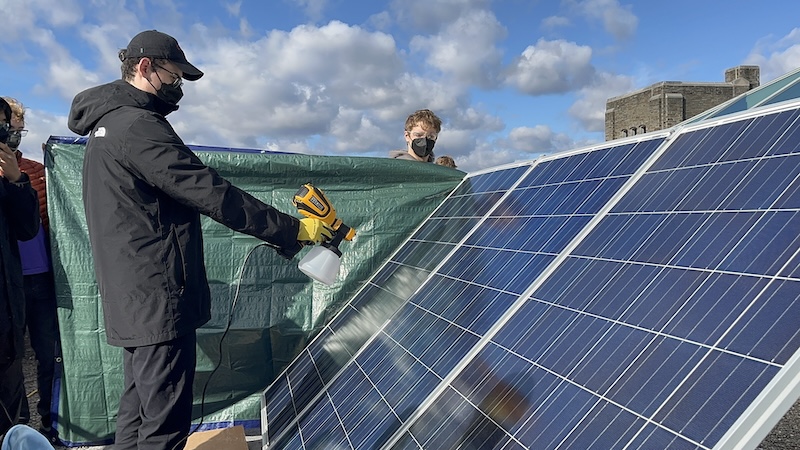
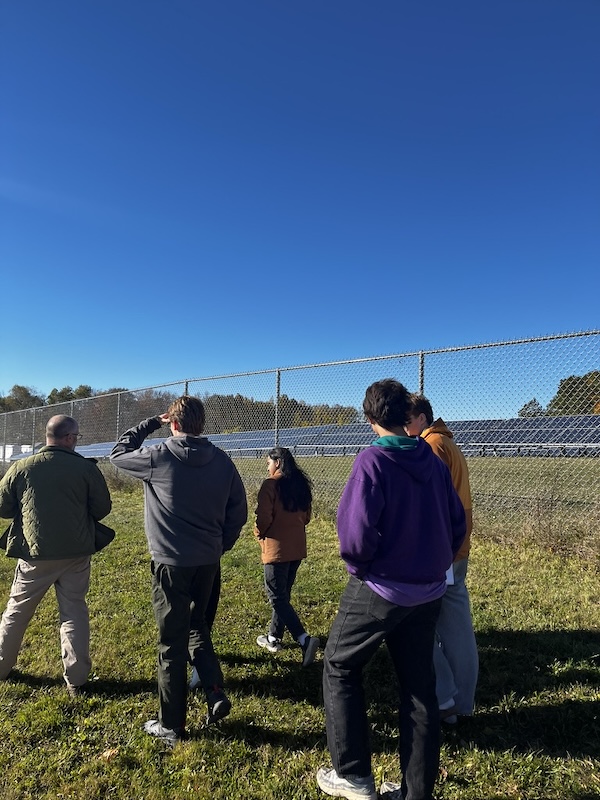
Snyder Road Solar Farms. Third, the team designed and improved
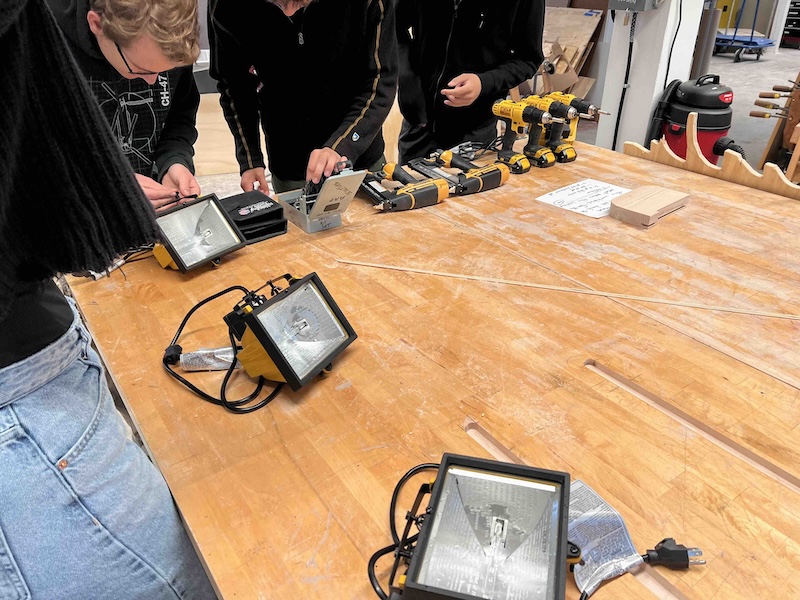
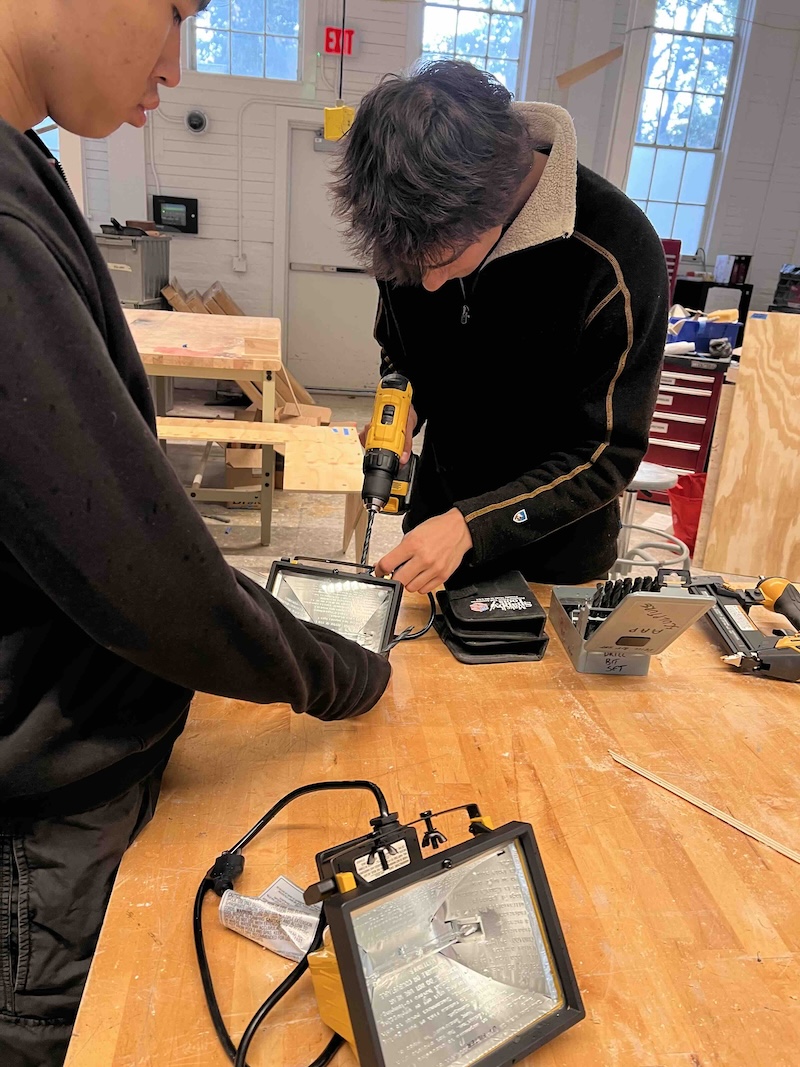
an indoor solar simulator using LED rods, halogen lamps, and
reflective Mylar, achieving approximately uniform 360 W/m²
irradiance after moving to a greenhouse lab.
Key Accomplishments This Semester
Solar potty design developed with a nature/rustic aesthetic,
gravity-fed sink, urine/solid waste separation, and rainwater
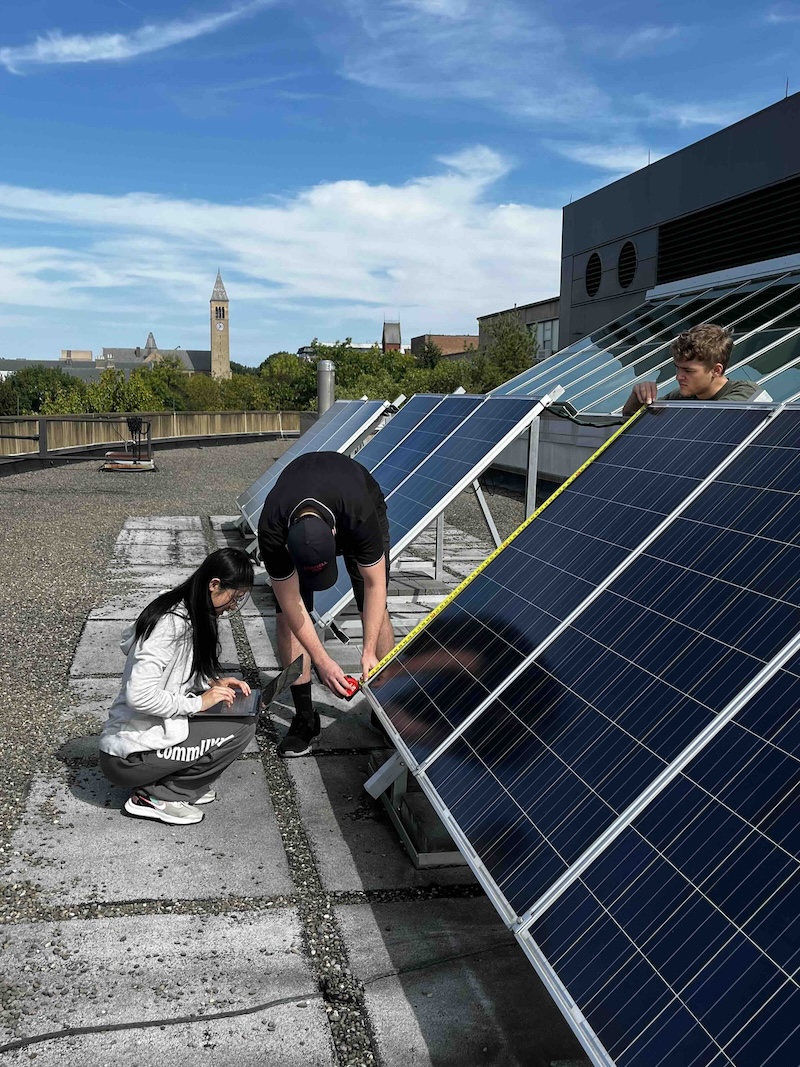
collection. Coating study shifted from Snee Hall solar modules
to controlled glass slide experiments after finding low natural
soiling levels in Ithaca. Solar simulator improved with ABS
halogen brackets and achieved roughly uniform irradiance for
reliable indoor panel testing.
Next Steps
Continue refinement of the solar potty for placement in public
spaces such as gardens, parks, and educational centers. Continue
coating analysis on glass slides to produce publishable
comparisons of hydrophobic vs. hydrophilic performance. Continue
improving the simulator for use by SPR and external
stakeholders, including Cogen and EERL.
Risks & How They Were Addressed
Natural soiling levels in Ithaca are too low for direct
real-world panel testing, requiring the team to pivot to
controlled glass slide experiments: a design decision that
allowed more precise variable control. The solar simulator
required structural improvements after relocating to the
greenhouse lab, which the team addressed with bracket
upgrades.
Our Work
Meet the Team
 Garrett SmithCo-Team Lead
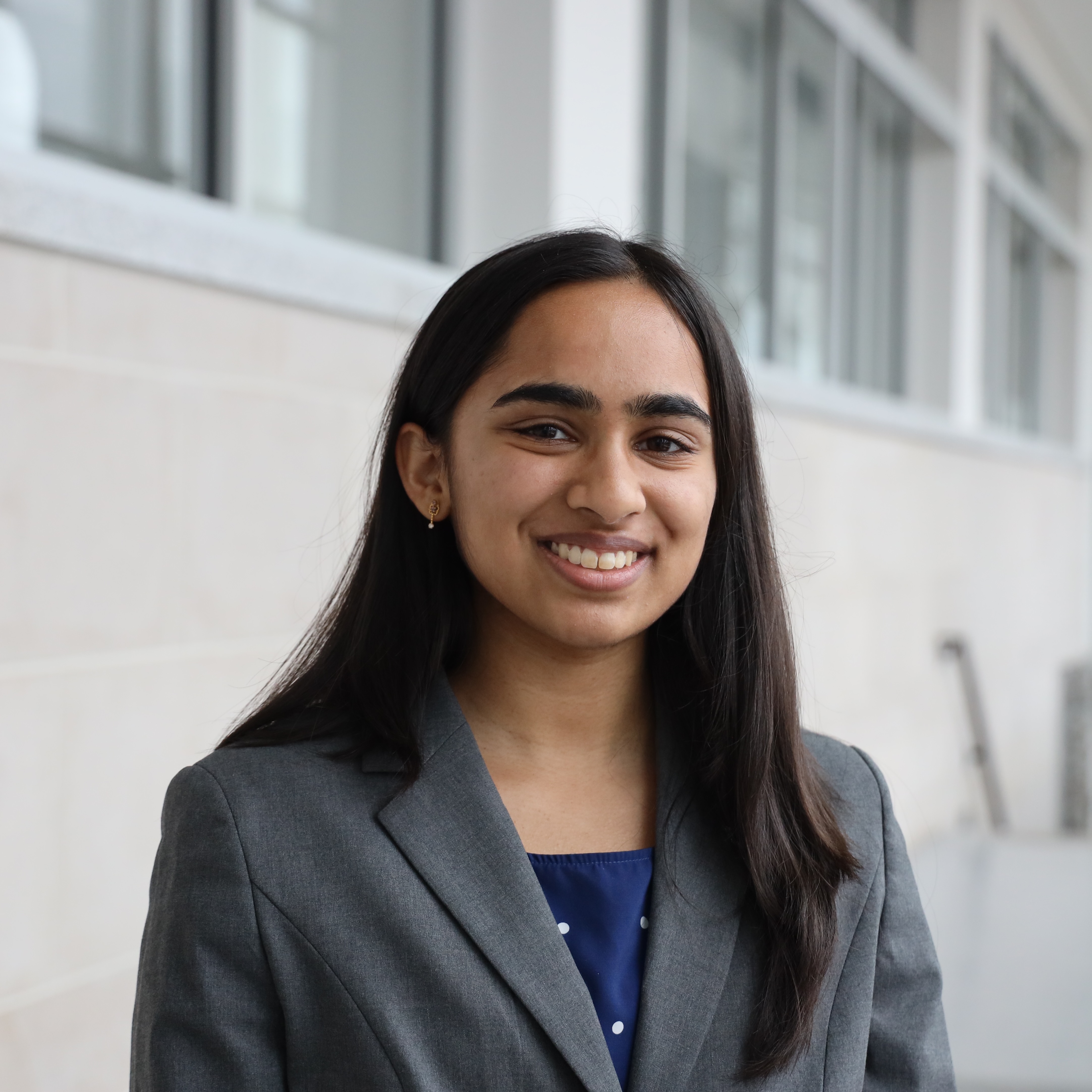 Supriya AnandCo-Team Lead
 Bishesh ShahMember
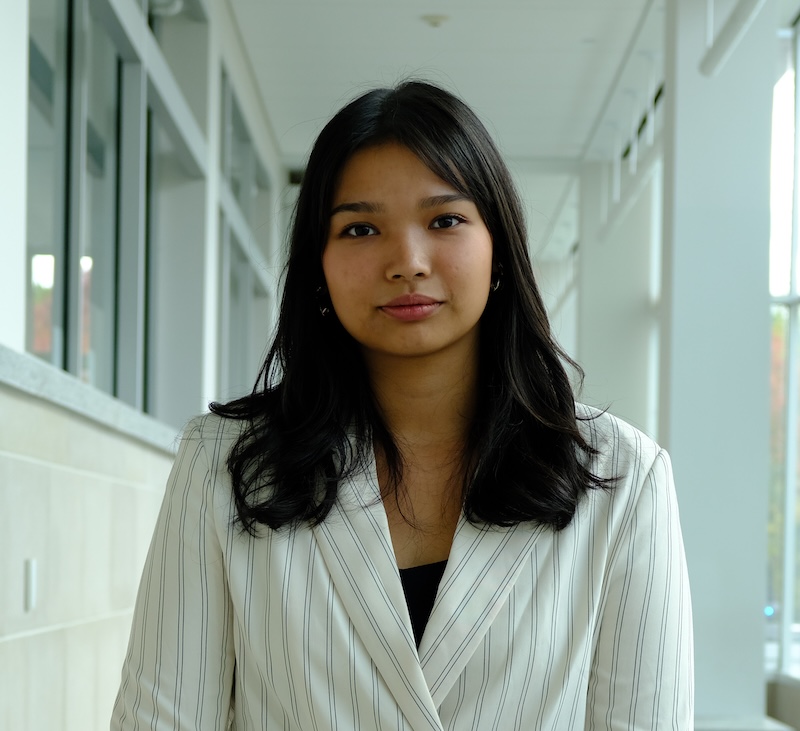 Ei KyawMember
 Eva ChenMember
 Eva GottesfeldMember
 Eva YangMember
 Evelyn ChenMember
 Oscar WangMember
 Pear IngkasampanMember
 William SpryMember