Public transit in Tompkins County serves a diverse ridership, but the
physical infrastructure supporting it, particularly bus stops, lags in
both function and user experience. The Sustainable Mobility team
approaches this challenge through two lenses: the Shelter subteam
designs next-generation bus stop shelters that are architecturally
distinctive, modular, and capable of displaying live transit
information, while the Masterplan subteam analyzes the county's broader
transit network to identify systemic gaps and community needs. This
semester, the Shelter subteam built and publicly debuted a physical
scale prototype of their shelter design, validating the structural
concept and bringing it one step closer to full-scale implementation.
Project Overview
Stakeholders
TCAT (Tompkins Consolidated Area Transit); Ithaca Tompkins
Regional Airport
Disciplines / Majors
Architecture, engineering, urban planning
Team Overview
The Sustainable Mobility team works to reimagine the transit
network of Tompkins County through a systems design thinking
approach that blends design thinking with systems engineering
principles. Guided by advisor Sirietta Simoncini, the team draws
on members from Architecture, Engineering, Planning, and other
disciplines. The team has two active subteams: Shelter and
Masterplan.
Problem Statement
Tompkins County's public transit system presents unique
challenges due to its geography, population density, and the
needs of diverse user groups including students, residents, and
commuters. Existing bus stop infrastructure lacks the
functionality, information display, and design quality needed to
encourage transit ridership and support sustainable community
mobility.
Approach
The Shelter subteam is designing interactive bus stop shelters
that dynamically display transit information through intuitive,
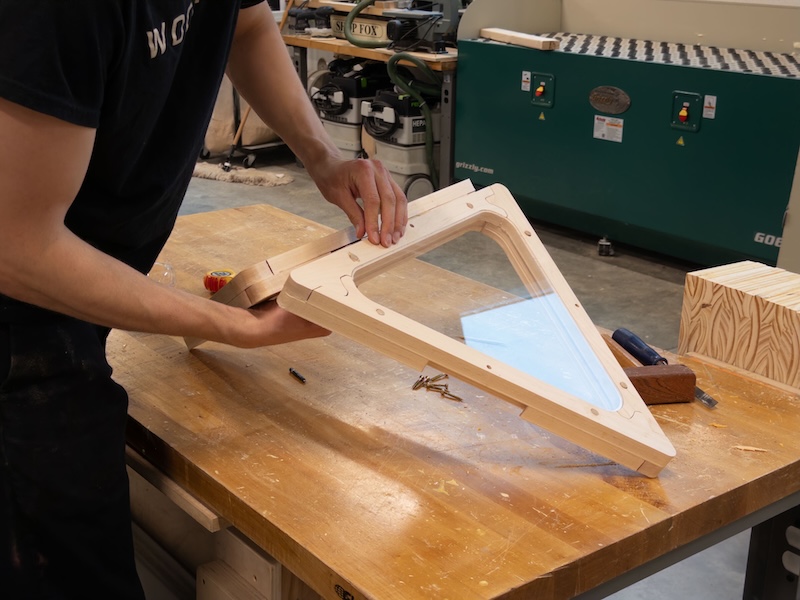
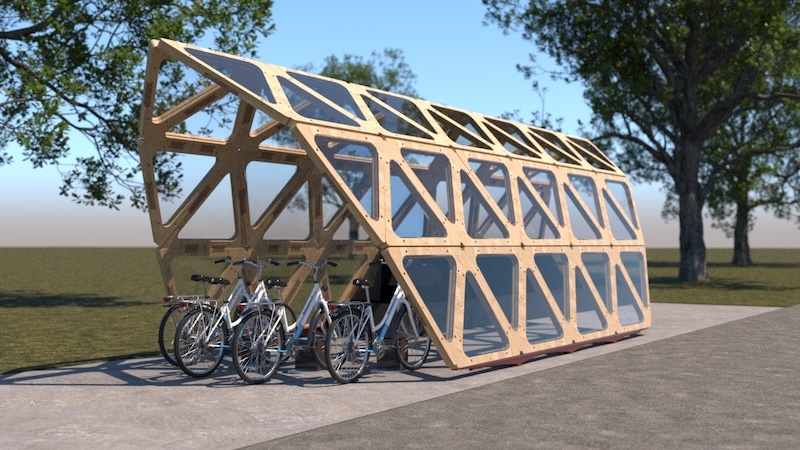
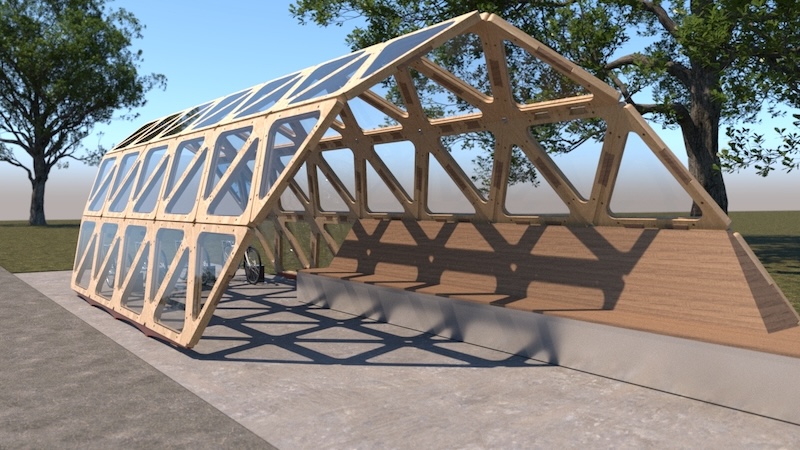
architecturally ambitious forms. The shelter design features a
catenary vault composed of modular, identical pieces that link
together like puzzle pieces, optimized for ease of manufacture
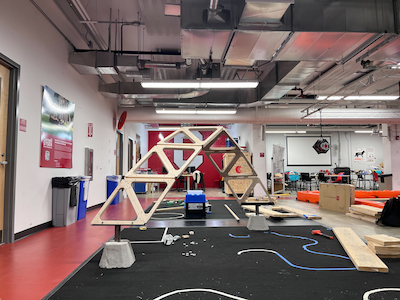
and assembly. A 1:2.5 scale prototype was built using CNC
milling for the wood frame and laser cutting for transparent
panels. The Masterplan subteam operates at a higher analytical
scale, identifying needs across the local transport ecosystem
and engaging the community on systemic solutions.
Key Accomplishments This Semester
Completed a 1:2.5 scale prototype of one arch of the shelter
structure, presented publicly at the Ithaca Airport Gala on
April 11, 2026. The prototype verified the viability of the
catenary vault design and demonstrated the modular assembly
concept. Full-scale concept renders have been produced for
stakeholder presentation.
Next Steps
Build on prototype learnings to advance toward a full-scale
shelter design. Continue the Masterplan subteam's community
engagement and needs analysis. Deepen partnerships with TCAT and
the Airport to define implementation pathways.
Risks & How They Were Addressed
Translating an ambitious architectural concept into a
manufacturable, durable shelter requires balancing design intent
with real-world constraints. Building and testing the prototype
was a key risk mitigation step: it confirmed that the modular
design is structurally viable and fabrication-ready.