Sustainable Smithsonian
Sustainability research and outreach for the Smithsonian Institution.

We are at the cross section between academia and real-world application working with the world's largest museum, education, and research complex that is the Smithsonian Institution.
- 2Leads
- 3Partners
About
The Sustainable Smithsonian Team (SST) is an ongoing partnership between CUSD and the Smithsonian Institution (SI), supporting its sustainability work through research, communications and strategy. Past work has spanned plastic reduction, zero-waste event planning, green building certifications and carbon sequestration. This semester the team split into two subteams: Climate Liability (sustainability communications for Smithsonian employees) and AI x Pollen GEO (the environmental tradeoffs of AI in ecological research).
- Partners
- Natascha Finnerty (contact at the Smithsonian Astrophysical Observatory)
- Linette Dutari (contact on the PollenGEO project)
- SAO Sustainability Group (employee sustainability group in Cambridge, MA)
Current projects
We are currently beginning a new project with researchers working on "Revolution Crossroads." This project uses AI to compile information from the revolutionary period of the US to surface untold stories and connect long separated stories. Our work involves evaluating the current environment impacts of AI usage in academia and to provide future recommendations to the Smithsonian.
Telling the good news
01 Research
The history of the Smithsonian's sustainability work, wins from around the world, and everyday tips.
02 Design
Infographics and posters, including a timeline of that history.
03 Write
A draft newsletter for Smithsonian employees, waiting on approval.
04 Meet
A virtual meeting with the SAO Sustainability Group.
Join the team
Who we're looking for
We are looking for people who keen at data analysis in both quantitative and qualitative fields and are able to contribute to scholarly discussion about real-world issues. Ideal candidates should come from a background of interdisciplinary studies and be knowledgeable about multiple fields of studies.
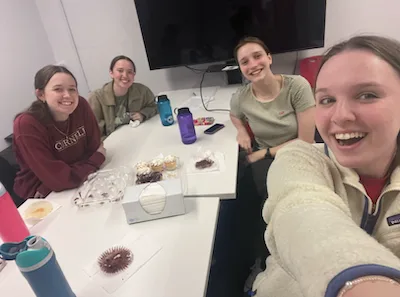
Team Photos
Project details
The problem
The SAO Sustainability Group has expressed frustration with the perceived lack of progress in sustainability initiatives at the Smithsonian, compounded by government restrictions under the current administration. Additionally, the growing use of AI in scientific research, including the PollenGEO pollen classification project, raises underexplored questions about AI's environmental costs versus its efficiency benefits.
Approach
The Climate Liability subteam pivoted from its prior 'Fly Less Fly Better' campaign focus to researching and communicating positive sustainability developments. This included three research areas: the history of SI sustainability initiatives, current global sustainability successes, and actionable sustainable living tips. Findings were synthesized into infographics, posters, and a draft newsletter for SI employees. The AI x Pollen GEO subteam researched the environmental footprint of AI (energy use, water consumption, carbon emissions, hardware production) and analyzed the tradeoffs specific to PollenGEO's deep learning approach to automated pollen classification.
This semester
Climate Liability: produced multiple infographics and posters covering SI sustainability history (timeline format), global good news in sustainability, and practical sustainable living tips. Drafted a newsletter for the SAO Sustainability Group pending institutional approval. Developed interview questions for an upcoming virtual meeting with the SAO Sustainability Group. AI x Pollen GEO: completed a comprehensive literature review on AI's environmental impacts, including energy, water, and hardware footprints, and identified strategies for improving AI sustainability through algorithmic efficiency, data center design, and standardized reporting.
Next steps
Climate Liability: launch newsletter if approved; hold virtual meeting with SAO Sustainability Group; continue building the relationship with the SI around positive sustainability communication. AI x Pollen GEO: present research findings to the PollenGEO team; refine research questions based on their feedback; advance toward a comparative analysis of AI versus manual research methods for pollen classification.
Meet the team
Leads

Clare Simon
Clare Simon on LinkedIn (opens in a new tab)Co-Lead

Molly Brown
Molly Brown on LinkedIn (opens in a new tab)Co-Lead

